By Hector Garcia · Analysed by Manuscript AI
14-day guarantee · Results in 2 hours or less
Overview
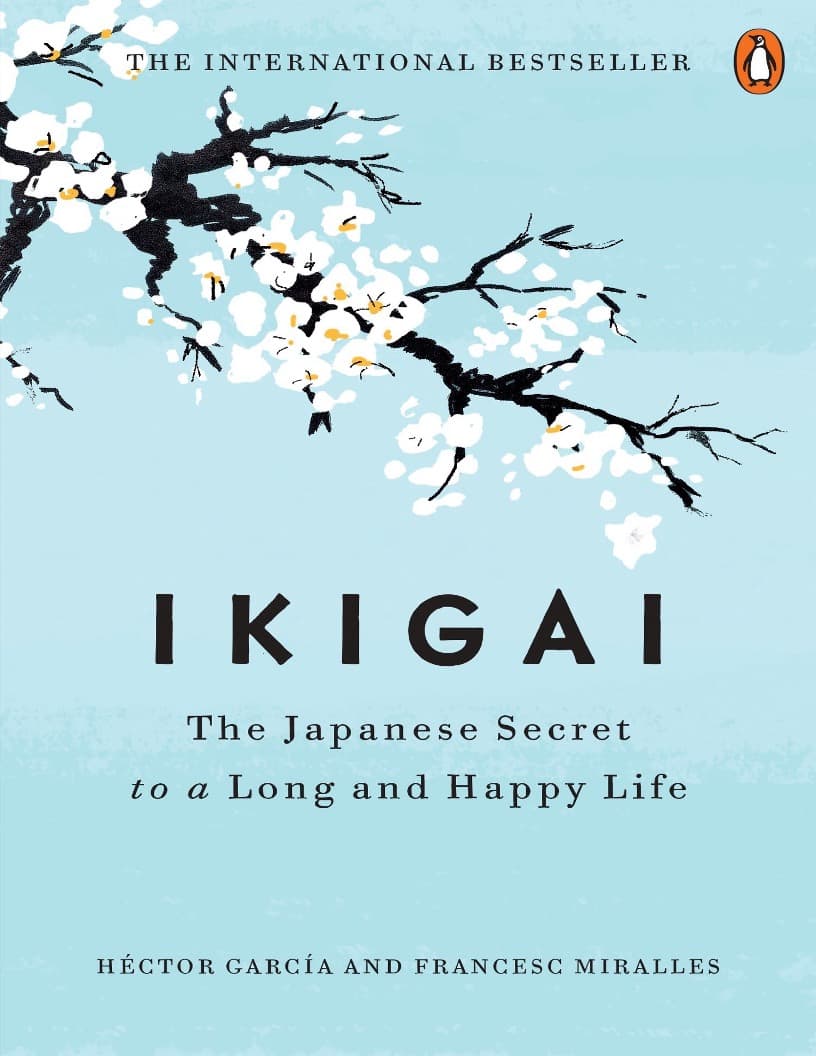
Ikigai introduces the Japanese concept of a "reason for being," presented as the thing that gets a person up in the morning, and proposes it as a key to a long and happy life. The prologue recounts how the two authors met in Tokyo, discussed logotherapy, and then traveled to Ogimi, the Okinawan "Village of Longevity," to interview its oldest residents. The first chapter sets out the core claims: that the Japanese do not really retire, that Okinawa and four other "Blue Zones" share traits such as diet, daily movement, purpose, and strong social ties, and that practices like hara hachi bu (eating until 80 percent full) and the moai support groups contribute to longevity.
The next chapters build the conceptual and practical foundation. A chapter on antiaging covers the idea of "escape velocity," the value of mental stimulation, the damage done by chronic stress and sedentary habits, the role of sleep and melatonin, and the importance of attitude. The book then turns to Viktor Frankl's logotherapy, summarizing its steps and illustrating it with case studies, before presenting Shoma Morita's Japanese therapy and Naikan meditation as parallel approaches to purpose and acceptance. The chapter on flow draws on Mihaly Csikszentmihalyi to explain how absorption in a well-matched challenge connects to ikigai, offering strategies such as choosing clear objectives and single-tasking. It illustrates flow with Japanese craftspeople, Jiro the sushi chef, Hayao Miyazaki, and the idea of "microflow" in routine tasks, and it closes with exercises for identifying one's own flow activities.
The middle of the book turns to evidence from people who have lived long. One chapter profiles supercentenarians such as Misao Okawa and Jeanne Calment and quotes artists who keep working into old age. Another recounts the authors' week in Ogimi, with its community life, spirituality, and birthday celebrations, followed by selected interview statements and a list of the village's lifestyle traits. Chapters on diet and movement then detail the Okinawan eating pattern, antioxidant foods, teas, and shikuwasa, along with radio taiso, yoga, tai chi, qigong, shiatsu, and breathing practices.
The final chapter addresses resilience, drawing on Buddhism, Stoicism, wabi-sabi, and ichi-go ichi-e, and extends to Nassim Taleb's antifragility with three steps for applying it. The epilogue offers poems by Mitsuo Aida and concludes with ten rules of ikigai: stay active, take it slow, don't fill your stomach, keep good friends, exercise, smile, reconnect with nature, give thanks, live in the moment, and follow your ikigai.
The Manuscript
How the book is built — structure, themes, audience and positioning.
The book's central message is that a long, happy life comes from having a purpose, an ikigai, "the reason we get up in the morning," and from staying busy, connected, and unhurried in pursuit of it. The authors argue that Okinawa's centenarians owe their longevity less to any single food than to this purposeful activity, supported by community (moai, yuimaaru), light movement, and eating until one is only 80 percent full. Hence their advice, "Stay active; don't retire," and their reassurance that you "should not worry too much about finding it," since "Life is not a problem to be solved."
The Ogimi interviews illustrate this: a woman says "Food won't help you live longer. The secret is smiling and having a good time," and Miyazaki keeps drawing after his "retirement."
The voice is warm, companionable, and unshowy: two travelers sharing discoveries with a general reader. Direct address ("Are you ready to throw yourself into your passion as if it were the most important thing in the world?") and the prologue's sign-off, "Happy travels!", set a tone of friendly invitation rather than expertise. Rhetorical questions recur ("But what is it, exactly? How do you get it?"), and they create momentum.
Sentences are mostly short and declarative, with occasional longer ones that gather lists. The rhythm is brisk and easy, but it can turn monotonous in the expository chapters, where claim follows claim in similar cadence. Bulleted lists and tables break the pace, which suits skimming.
Concrete detail is the book's best asset where it appears. The brush-maker in Kumano, "so focused on choosing individual bristles… that she didn't even notice our presence," and the Ogimi arrival, with the "unattractive cinderblock building right off the highway," feel lived. The interview fragments ("I say, 'Hello!' and 'See you later!' to the children on their way to school") carry the voice of real people.
The style suits a popular self-help reader well: accessible, anecdotal, and encouraging.
Weakness 1: Flat, assertive generalization. Claims arrive without texture or hedging: "Few would challenge this idea," or "Most doctors agree that the secret to keeping the body young is keeping the mind active." These sound authoritative but read as filler.
Weakness 2: Abrupt tonal and register shifts. The text lurches from the evocative Ogimi scenes to dry, encyclopedic lists (the qigong stages, the fifteen antioxidants), and the personal "we" vanishes.
Improvement: Anchor each informational section in one concrete scene from the authors' own travels, as in the Kumano passage. For example, introduce the antioxidant list through the shikuwasa cake served at the birthday party, so the facts inherit the narrative's warmth.
The central thread holds well across the book. Ikigai is introduced in the prologue as "the happiness of always being busy," and it keeps returning as the explanatory hinge: Frankl's "reasons to live," flow as "evidence that we are in tune with our ikigai," Ogimi's centenarians, and the closing rule "Follow your ikigai." Short, boxed segments and recurring phrases ("here and now") keep the register consistently breezy and accessible.
Continuity is less even in content and difficulty. The shift from the stress and telomere material in chapter II to the Frankl case studies is smooth, since both circle purpose and longevity. But the chapters swing between registers: a dense hormonal account ("pituitary gland... corticotropin... adrenal gland") sits beside a rabbit-and-sign analogy, and the Ogimi chapter is first-person travelogue ("we're finally able to stop worrying about the traffic") after the more instructional chapter V.
Negative 1: Chapter VIII on movement is the clearest rupture. After the narrative warmth of Ogimi and the diet chapter, it becomes a catalogue of yoga types, tai chi styles, qigong's "Tyau Shenn" and step-by-step postures, and the Six Healing Sounds. The tie to ikigai is thin, and the chapter's own admission, "It might feel confusing to be presented with all the Eastern traditions," confirms the overload.
Negative 2: Digressions interrupt momentum. In chapter II, "Aging's escape velocity" and Kurzweil's immortality speculation sit oddly beside practical antiaging advice, and in chapter IV the Steve Jobs and Feynman anecdotes extend flow well beyond what the ikigai argument needs, while the chapter's own thesis returns only at "Using flow to find your ikigai."
Improvement: Open each chapter with a one-sentence bridge stating its link to ikigai, and place the exercise sequences in the movement chapter into a clearly marked practice section, so the Ogimi narrative leads directly into the resilience chapter.
The authors' passion comes through most clearly when they stop explaining and start narrating. The Ogimi chapter carries the book's warmest voice. Their description of arriving ("To our left are the sea and an empty stretch of beach; to our right, the mountainous jungle of Okinawa's Yanbaru forests") is vivid and personal. The humor is gentle and self-deprecating: "we lose to a woman who recently turned 104," and "the defeated look on our faces elicits laughter." The closing scene, where they drink "Longevity Water" in a parking lot "hoping" it will bring them health, shows their affection for the place without overselling it. The prologue's origin story, "a rainy night in Tokyo... one of the city's tiny bars," also sets up a friendly, companionable relationship with the reader, reinforced by "Happy travels!"
The tone suits a general, self-help audience. Sentences are short and direct, and the rhetorical questions ("What is your reason for being?") invite the reader in. Second-person imperatives such as "Whatever you do, don't retire!" and "Smile" are encouraging rather than preachy. Their enthusiasm for Miyazaki, who "can't stop drawing," and for the takumi who "danced and flowed" is infectious.
The passion is less consistent elsewhere. The antiaging, diet and exercise chapters shift into a brisker, encyclopedic register, with lists of benefits and step-by-step instructions, and the authors' own voice largely disappears. Claims such as "Science has shown that sleep is a key antiaging tool" read as generic wellness copy, and the tone is more promotional than curious. The confident, upbeat register also occasionally outruns the evidence, for example "Few would challenge this idea" about calorie restriction.
Overall, the authors' warmth and fascination are genuine and most alive in anecdote and travel writing, while the instructional sections dilute their personality.
The prose is accessible, and its plainness is a deliberate strength. Sentences are short and declarative, often in direct address: "Imagine you are skiing down one of your favorite slopes." Questions drive the argument ("What is the meaning of my life?"), which gives a conversational rhythm. Foreign terms are almost always glossed on first use: "hara hachi bu... means something like 'Fill your belly to 80 percent,'" or "yuimaaru, or teamwork." The Japanese vocabulary (moai, takumi, mabui) is dense but never left unexplained.
Technical language is handled lightly. The stress passage does name "the pituitary gland... corticotropin... adrenaline and cortisol," but the cave-dweller versus modern-human comparison makes it digestible. Terms like "telomeres," "IGF-1," and "nobiletin" appear with minimal explanation, though they're brief and rarely load-bearing. Claims such as "Meditation generates alpha and theta brain waves" are asserted rather than explained, which reads as simple rather than jargon-heavy.
The text does sometimes tip into oversimplification. "We all carry a spa with us everywhere we go" and "Flow is mysterious. It is like a muscle" substitute metaphor for explanation. The escape-velocity rabbit analogy is clear but convoluted, since the sign-and-rabbit logic is confusingly described ("the rabbit is half a year as far away"). Statements like "Few would challenge this idea" about calorie restriction gloss over real scientific uncertainty, and the chapter's own next sentence admits it is "not yet known" for humans.
Clarity occasionally suffers from translation and editing: "the pleasure, delight, creativity, and process when we are completely immersed in life" is ungrammatical, and the Ikigai characters explanation is muddled. Overall, the register suits a general audience, erring toward simple rather than technical.
Chapters rarely have both a clear opening and closing. Openings are strong: Chapter VIII begins "STUDIES FROM THE Blue Zones suggest that the people who live longest are not the ones who do the most exercise but rather the ones who move the most," and Chapter IX defines resilience immediately. Closings are weaker. Chapter II ends with a song, then "We can now use our fingers to turn the page." Chapter VII stops on a Daily Mirror food list, and Chapter VIII on a qigong poem and a breathing takeaway. Headings are frequent and clear ("Stress: Accused of killing longevity"), but sidebars interrupt the flow. Chapter IV's cohesive strategies are an exception.
Yes. The book gives readers several concrete things to do. Three of the clearest:
Use flow to locate your ikigai. In "Using flow to find your ikigai," the authors tell you to "Write all of them on a piece of paper," meaning the activities that put you in flow. You then ask what they share: "are all the activities you most like doing ones that you practice alone or with other people? Do you flow more when doing things that require you to move your body or just to think?" If the answer isn't clear, "try new things that are not on the list," such as painting if you like photography, or surfing if you love snowboarding.
Apply the 80 percent rule and eat for longevity. The chapter on diet advises, "When you notice you're almost full but could have a little more . . . just stop eating!" It suggests skipping dessert or reducing portions, serving food "on many small plates," "eating the rainbow," and drinking jasmine, green, or white tea.
Build antifragility in three steps. The resilience chapter lays out: "Create redundancies" (more than one income source, friendships, interests); "Bet conservatively in certain areas and take many small risks in others" (the $9,000/$1,000 investment example); and "Get rid of the things that make you fragile," through "good riddance" goals like "Stop snacking between meals" or "Avoid spending time with toxic people."
The authors also close with "The ten rules of ikigai," including "Stay active; don't retire" and "Take it slow," and the flow chapter adds anti-distraction tactics such as the Pomodoro Technique.
Mostly yes. The prose is plain, short-paragraphed, and builds each idea with a concrete image. The rabbit holding a sign makes "aging's escape velocity" graspable in a few lines. The "Seven Conditions for Achieving Flow" are followed by a strategy-by-strategy walkthrough, and the Boredom/Flow/Anxiety diagram makes the "difficult but not too difficult" point instantly. Logotherapy is clarified well by the five-step summary and the four case studies, and the "Ten Differences" table is a clear contrast.
The boxes work best when they isolate one compact idea: "The 80 percent secret," the "Bunagaya Spirits" sidebar, the "Archer's Secret" aside, and the "Something to Live For" statistic each add color without interrupting the argument.
Some devices are less successful. The Concentrating on a Single Task/Multitasking table repeats the surrounding text point by point, and "Advantages of Flow / Disadvantages of Distraction" is similarly redundant. The Vague Objective grid is hard to decode: its cells ("Mental block," "Flow," "Mental block") lack clear row and column logic. Some boxes sit awkwardly mid-flow, such as "Mabui" dropped between community and gateball material, and the "T. H. White" quotation interrupts the artists' testimonies.
Clarity also slips when the text moves quickly between concepts. Ikigai is defined as "the happiness of always being busy," then as a reason for being, then as flow, so the central term stays slippery. The Qigong and Six Healing Sounds sections are dense with terms ("Tyau Shenn," "Triple Heater") that go unexplained, and the closing note that "It might feel confusing" concedes the problem.
Deep Dive
Readability metrics, an AI-generated summary and tailored recommendations for every chapter.
1. Ikigai as the unifying explanation for longevity
Main idea: The authors present ikigai as the deeper factor behind Okinawan longevity, one that goes beyond diet, climate, and environment and that Western psychology has not yet explored in book form.
Supporting evidence: "we realized that something far more powerful than just these natural resources was at work: an uncommon joy flows from its inhabitants and guides them through the long and pleasurable journey of their lives."
Significance: This is the book's central thesis and the question the rest of the work must answer: what ikigai is and how a reader can get it.
2. Ogimi as the field-research anchor
Main idea: The authors ground their inquiry in firsthand study of Ogimi, the "Village of Longevity," and present it as a place where long life and everyday joy are visibly connected.
Supporting evidence: "Ogimi, a rural town on the north end of the island with a population of three thousand, boasts the highest life expectancy in the world— a fact that has earned it the nickname the Village of Longevity."
Significance: Ogimi gives the book its credibility and narrative framework, since the interviews with its elders are the source of the "secrets" promised to the reader.
3. Community and purpose as paired ingredients of a good life
Main idea: Alongside healthy habits, the authors stress that belonging to a community, expressed through Okinawan values like ichariba chode and yuimaaru, is part of what sustains these centenarians, with ikigai at the core.
Supporting evidence: "It turns out that one of the secrets to happiness of Ogimi's residents is feeling like part of a community."
Significance: It broadens ikigai from a private search for meaning into a social and practical way of living, and it prepares the book's promise to give readers "the tools to find your own ikigai."
1. Writing style and flow: Fix the drifting sequence of questions and claims
The issue: The introduction stacks rhetorical questions and abrupt asides so the argument keeps restarting: "Is ikigai the reason there are more centenarians in Okinawa than anywhere else? How does it inspire people to stay active until the very end? What is the secret to a long and happy life?" It then drops into a fruit digression ("Okinawa is where most of Japan's shikuwasa... comes from") and later repeats the same cliffhanger: "Again, the mysterious ikigai. But what is it, exactly? How do you get it?"
Why it matters: The reader is asked the same question three times without being moved forward. The shikuwasa and Moringa tea asides break the thread, and the one-sentence paragraphs make the rhythm choppy rather than purposeful.
How to implement: Keep one strong question cluster near the start and one at the turn toward Ogimi, and cut the rest. Fold the shikuwasa and Moringa material into a single sentence about the "natural resources" you later dismiss. Merge the one-line paragraphs into fuller ones, so that "It turns out that one of the secrets..." and "From an early age they practice yuimaaru" read as one developing point.
2. Storytelling and impact: Replace the summary of the visit with a scene
The issue: The most promising material is told in generalities: "As soon as we arrived we could sense the incredible friendliness of its residents, who laughed and joked incessantly amid lush green hills fed by crystalline waters." The opening Tokyo bar scene is vivid, but the Ogimi visit has no person, no voice, and no moment. "An uncommon joy flows from its inhabitants" is asserted, not shown.
Why it matters: The emotional payoff of the book's promise, that these centenarians have found something you can have too, rests on cliché ("lush green hills," "crystalline waters") rather than on a human encounter. The reader is told to feel the joy but never meets it.
How to implement: Replace the arrival paragraph with one concrete moment: a named elder, what they were doing, a line they said, and what struck you. Then let "Again, the mysterious ikigai" follow from that scene, so the question arises from something the reader has seen. Cut the stock landscape phrases.
3. Literary and analytical criteria: Tighten the claims and define ikigai honestly
The issue: Several claims are loose or overreaching. Ikigai "translates roughly as 'the happiness of always being busy,'" and is "like logotherapy, but it goes a step beyond," with no explanation of how. "Not a single book in the fields of psychology or personal development is dedicated to bringing this philosophy to the West" is an unsupported absolute. The statistic "24.55 people over the age of 100 for every 100,000 inhabitants" is given without a source or comparison, and Ogimi is said to have "the highest life expectancy in the world" as a flat fact. The village's "animist religion that features long-haired forest sprites" is exoticized rather than explained.
Why it matters: A book that offers "the secrets of Japan's centenarians" needs credibility from the first pages. Unsourced superlatives, and a definition of the central term that is both vague and arguably reductive, invite skepticism and make ikigai sound like a slogan rather than a concept.
How to implement: Give a precise, sourced definition of ikigai (its etymology and how Japanese speakers use it) and say concretely how it differs from Frankl's logotherapy. Soften or source the absolutes ("to our knowledge, no major book...") and give the centenarian statistic a source and a comparison figure. Present the diet, community, and climate factors as contributing hypotheses rather than settled causes, and explain, rather than just label, the local beliefs and terms such as ichariba chode and yuimaaru.
1. Ikigai as the engine of longevity
Main idea: The chapter argues that having a clearly defined reason for living is central to long life, and that Japanese culture sustains this by treating work and purpose as lifelong rather than something to retire from.
Supporting evidence: "According to those born on Okinawa, the island with the most centenarians in the world, our ikigai is the reason we get up in the morning."
Significance: This is the book's organizing premise and promise ("The purpose of this book is to help you find yours"), so everything that follows, from aging to diet to resilience, is framed in relation to purpose.
2. Blue Zones show that lifestyle and community, not just diet, drive longevity
Main idea: By citing five long-lived regions, the chapter proposes that longevity comes from a shared cluster of habits: purposeful living, moderate eating, daily low-intensity movement, and strong social ties.
Supporting evidence: "According to scientists who have studied the five Blue Zones, the keys to longevity are diet, exercise, finding a purpose in life (an ikigai), and forming strong social ties—that is, having a broad circle of friends and good family relations."
Significance: This gives ikigai scientific-sounding grounding and places it among practical, adoptable factors, which sets up the later chapters on nutrition, exercise, and relationships.
3. Concrete Okinawan practices: hara hachi bu and the moai
Main idea: The chapter makes the philosophy tangible through two customs: eating until about 80 percent full, and the moai, a mutual-support group that provides emotional and financial security.
Supporting evidence: "A moai is an informal group of people with common interests who look out for one another. For many, serving the community becomes part of their ikigai."
Significance: These examples turn an abstract concept into habits readers can copy, and they link purpose to restraint and belonging, a connection the book keeps returning to.
1. Writing style and flow: Untangle the claims and the cross-references
The issue: The introduction keeps interrupting itself with forward pointers and shifting registers: "Though we will consider each of these findings over the course of the book," "(see page 15)," "In the chapter dedicated to nutrition we will see which healthy, antioxidant-rich foods are included in this 80 percent," and "In the following chapters, we will examine several factors." The order also wobbles: the Blue Zones section ends on "three of these regions are islands," then restates the keys to longevity, then drifts into exercise, so the thread is lost.
Why it matters: Each promise to explain later delays the payoff and makes the opening feel like a table of contents rather than an argument. The reader is told what is coming several times, but the ideas never build on one another.
How to implement: Keep one roadmap, the closing "FOLLOWING THIS BRIEF introduction" line, and cut the rest. Merge the two lists of longevity factors into a single statement placed after the five regions are described. Reorder the Blue Zones section as: regions, shared factors, then the island observation. Replace "see page 15" with a plain-language reference such as "described below."
2. Storytelling and impact: Replace generalities with one human face
The issue: The opening promises a search for a "reason for being," yet the evidence arrives as abstractions: "Many of these centenarians enjoy enviable levels of vitality," "Locals remain remarkably active after ninety," and "Whatever you do, don't retire!" No single person, scene, or voice appears. Even the moai is explained as an accounting mechanism ("Members of a moai make a set monthly contribution to the group") rather than as lived experience.
Why it matters: An ikigai is an intimate, emotional idea, but the text delivers it through statistics and lists. The reader is told that purpose matters without feeling it, which weakens persuasion and the invitation to look inward that the first paragraphs set up.
How to implement: Open with a short scene: one Okinawan elder rising in the morning and going to a garden, a fishing boat, or a moai dinner, with a quoted line about why they get up. Return to that person at the moai section, so the contribution scheme is shown through a member who once received an advance from the group. Let the "Don't retire!" line follow the scene as its natural conclusion rather than standing alone as a slogan.
3. Literary and analytical criteria: Calibrate the evidence and separate correlation from cause
The issue: The text makes causal claims it does not support. "Their blood tests reveal fewer free radicals... as a result of drinking tea and eating until their stomachs are only 80 percent full" asserts cause outright. "Research clearly indicates that the Okinawans' focus on ikigai... plays an important role in their health and longevity" rests on unnamed "longevity studies" and "recent studies by nutritionists." The claim that "Westerners in Japan typically lose weight and stay trim" is offered as fact because of small plates. Even the "no word in Japanese that means retire" claim leans on a single journalist, Dan Buettner. The footnote "1" is the only visible sourcing.
Why it matters: Readers who are skeptical, or who know the research, will discount the whole premise when correlation is presented as proof. The book's central thesis, that purpose extends life, deserves sturdier support than reporter testimony and "studies suggest."
How to implement: Name the studies, researchers, or institutions behind the calorie and BMI figures and the free-radical finding, and add notes for each. Change "as a result of" to "which researchers link to," and "clearly indicates" to "suggests." Acknowledge that the Blue Zones are observational and that diet, genes, and community are intertwined, then state the ikigai hypothesis as one strong contributing factor rather than a proven cause. Qualify the retirement-vocabulary claim with a linguistic source or a note on nuance.
1. Mental engagement keeps the aging mind and body young
Main idea: Staying mentally active and adaptable slows aging, because new stimuli build fresh neural connections while ingrained routines let the brain coast. A positive outlook amplifies the benefit.
Supporting evidence: "The problem is that when the brain develops ingrained habits, it doesn't need to think anymore... the only way of breaking these is to confront the brain with new information."
Significance: This ties the chapter to the book's ikigai theme, since a purposeful, curious, challenged life is presented as a practical longevity strategy and not just a pleasant one.
2. Chronic stress accelerates aging, but a little stress helps
Main idea: Sustained, intense stress damages cells and shortens life, while low levels of stress and engaged striving are associated with longer lives. Mindfulness is offered as a way to manage the harmful kind.
Supporting evidence: "They found that stress promotes cellular aging by weakening cell structures known as telomeres, which affect cellular regeneration and how our cells age."
Significance: This sets up the book's balanced view of work and challenge, which explains why the supercentenarians it profiles often "lived intense lives and working well into old age" rather than retiring into idleness.
3. Small daily habits (movement, sleep, attitude) add up to longevity
Main idea: Modest lifestyle changes such as less sitting, enough sleep, and a positive, stoic outlook protect the body and extend life. Longevity is portrayed as the product of everyday choices more than of future technology.
Supporting evidence: "The life you live is equally or more important for longevity."
Significance: This grounds the book's practical, accessible message, echoed in the Ogimi song's "we live each day with serenity and we enjoy the journey," and contrasts it with the speculative "escape velocity" idea that opens the chapter.
1. Writing style and flow: Fix the broken lists and stray fragments
The issue: Several bulleted lists have collapsed into run-on lines, and some sentences are cut off mid-thought. Examples: "Get the right amount of sleep. Seven to nine hours is good, but any more than that makes us lethargic. Play with children or pets, or join a sports team." (two separate tips fused into one item); "It contains an element that protects against cancer. It promotes the natural production of insulin."; "Eating a balanced diet and getting more calcium. Soaking up a moderate amount of sun each day. Getting enough sleep."; and the broken line "You ask them if the omelet they just ate had onion / in it".
Why it matters: Readers can't tell where one tip ends and the next begins, so the practical advice looks sloppy and is harder to scan and remember. The fragments also interrupt the otherwise brisk, conversational rhythm.
How to implement: Give every tip its own line with parallel grammar, for example all imperatives in the sedentary list ("Sleep seven to nine hours." / "Play with children or pets, or join a sports team."). Make the melatonin benefits and compensating habits two cleanly formatted lists with consistent structure, and repair the broken quotation and the mid-sentence line breaks.
2. Storytelling and impact: Replace the generic claims with people and scenes
The issue: Many sections assert benefits abstractly, then move on. "Most doctors agree that the secret to keeping the body young is keeping the mind active", "Science has shown that sleep is a key antiaging tool", and "Many centenarians and supercentenarians have similar profiles" are never illustrated. The strongest moments are the rabbit analogy and the centenarian's song, yet the Ogimi song arrives as a closing flourish with no scene-setting. Alexander Imich gets a single line.
Why it matters: The book's emotional pull comes from real lives in places like Ogimi. Without them, the chapter reads like a wellness listicle, and readers have little reason to believe or act on its advice.
How to implement: Anchor each section in one concrete example. For instance, open "Antiaging attitudes" with Imich's day-to-day habits rather than a one-line quote. Introduce the song earlier, with a short description of the woman, the setting and what she did each morning, and tie its lines ("go to bed early, get up early", "we get on well with all of our friends") back to the sections on sleep, movement and community.
3. Literary and analytical criteria: Qualify the evidence and resolve the contradictions
The issue: The chapter leans on thin or vaguely cited studies and draws sweeping conclusions. A single "young doctor" at Heidelberg and "thirty-nine women" at the University of California support "stress promotes cellular aging". The American Institute of Stress "concluded that most health problems are caused by stress." Friedman's finding that stress-tolerant workers lived longer becomes "a small dose of stress is a positive thing," even though they lived longer because they "tend to develop healthier habits", which is a correlation. The text also pulls in different directions: stress is "clearly harmful," yet "a little stress is good for you"; and "Many people seem older than they are" is used as a bridge to premature aging with no data. The escape-velocity opening is strangely presented as certain ("we would achieve biological immortality") before the limit of "120 years" is raised.
Why it matters: Overstated causal claims erode credibility with skeptical readers, and unresolved tensions leave them unsure what to do: avoid stress, or seek challenge?
How to implement: Distinguish correlation from causation in each study ("was associated with," not "causes"), note sample sizes and limits, and cite sources fully in the notes. Add a short bridge that separates acute, manageable challenge from chronic, uncontrolled stress, and place it where the two stress sections meet. Also present the escape-velocity idea as a hypothesis, weighing Kurzweil and de Grey against the biologists' 120-year ceiling more evenly.
1. Purpose is discovered, not invented, and it turns suffering into a driver
Main idea: Logotherapy holds that existential frustration is not an illness but "spiritual anguish" that pushes a person to find a purpose they already possess, which then lets them endure hardship. Frankl's case studies, such as the suicidal mother who realizes her life "was full of meaning," show purpose being uncovered rather than created.
Supporting evidence: "We don't create the meaning of our life, as Sartre claimed—we discover it."
Significance: This is the chapter's central claim and the foundation for the book's concept of ikigai as "existential fuel," reframing emptiness as a signal to act rather than a pathology.
2. Freedom of attitude and the tension of striving are what sustain health
Main idea: Frankl argues that even in the worst circumstances, a person keeps the freedom to choose their response. He adds that well-being depends on the tension between what we have achieved and what we want to achieve, not on a peaceful existence. His own survival at Auschwitz, driven by the need to rewrite his confiscated manuscript, exemplifies both ideas.
Supporting evidence: "Everything can be taken from a man but one thing: the last of the human freedoms—to choose one's attitude in any given set of circumstances, to choose one's own way."
Significance: It ties purpose to longevity and resilience, supporting the book's promise of living "longer and better" through challenge and goals instead of comfort.
3. Morita therapy complements logotherapy by locating purpose in accepting emotions and acting
Main idea: Morita therapy teaches patients not to fight their feelings but to accept them and focus on "what action should we be taking?", since emotions change as a result of action. Together with logotherapy, it frames ikigai as something reachable without therapists or retreats, through courage and effort.
Supporting evidence: "We can't control our emotions, but we can take charge of our actions every day."
Significance: It brings an Eastern, action-based counterpart into the Western framework and leads into the practical tools of the following chapters, such as flow, mindful eating, gentle exercise, and resilience.
1. Writing style and flow: Fix the shaky transitions and the stray, inconsistent signposting
The issue: The chapter lurches between ideas without bridges. "What, then, does logotherapy do? 1 / The answer is pretty clear: It helps you find reasons to live." leaves a footnote number stranded mid-flow, and the chapter later announces "we will look at four cases from Frankl's own practice" but then opens with "Case study: Viktor Frankl," who is not a patient case like the other three, and ends the Frankl material abruptly with no link to what follows.
Why it matters: Readers lose the thread of the argument, and the unexplained jumps (from Frankl's five steps to "Fight for yourself," from the cases to "Morita therapy") make the chapter feel like stitched notes rather than a guided progression.
How to implement: Add one or two sentences at each major seam saying why the next section follows, such as a closing line after the case studies noting what all four share (a purpose found, not invented) and an opening line for Morita explaining why a Japanese counterpart belongs here. Remove or standardize the stray footnote numerals, and make the "four cases" promise accurate by either reframing Frankl as a fifth, personal example or changing the count.
2. Storytelling and impact: Let the case studies breathe as scenes, not summaries
The issue: The most powerful material is compressed into flat summary. "Frankl, however, showed him in just a few sessions that his frustration was due to the fact that he wanted to pursue a different career" tells us the breakthrough without showing the exchange, and the doctor's story ends with the tidy assertion "His life had been given a purpose," even though the preceding moment ("The doctor didn't say another word") already carried the emotion.
Why it matters: The chapter's persuasive force rests on these stories, yet the reader is told the outcome rather than allowed to feel it, and explanatory sentences at the end of each case blunt the emotional resonance the quoted lines have already earned.
How to implement: Expand the diplomat case with a few lines of reconstructed dialogue or Frankl's actual questions, and end the doctor and mother cases on their strongest image or quotation ("My life was no failure!" and the silent handshake), cutting the closing explanations such as "the suicidal mother found the meaning that, though she was not aware of it, her life already had." Open the chapter with one of these stories rather than the definitional anecdote to hook the reader sooner.
3. Literary and analytical criteria: Support the claims and acknowledge their limits
The issue: Sweeping claims are asserted without evidence or qualification: "psychiatrists confirmed that the prisoners with the greatest chance of survival were those who had things they wanted to accomplish," Morita therapy "proved to be effective in the treatment of neurosis, obsessive-compulsive disorder, and posttraumatic stress," and the diplomat "couldn't even really be considered a 'patient.'" The text also equates Frankl's discovered meaning with Morita's acceptance of feelings ("Logotherapy and Morita therapy are both grounded in a personal, unique experience") while Morita explicitly says to avoid intellectualizing and focus on action, a tension left unexamined.
Why it matters: Unsourced, absolute statements undermine credibility with skeptical readers, and glossing over real differences between the two approaches (and Frankl's own caveat that survival was never guaranteed by purpose) flattens the intellectual depth the topic deserves.
How to implement: Name the sources or studies behind the survival and efficacy claims, or soften them to "many observers believed" where evidence is thin. Add a short comparative passage that states honestly where logotherapy (find and choose a meaning) and Morita therapy (act first, accept feeling, don't analyze) diverge, and explain how ikigai reconciles them, rather than declaring them identical.
1. Flow is the key ingredient of an optimal experience
Main idea: Csikszentmihalyi's "flow," total immersion in a task, is presented as a central ingredient of living by one's ikigai, and the chapter argues we should spend more time in it than in activities offering mere immediate pleasure.
Supporting evidence: "flow is 'the state in which people are so involved in an activity that nothing else seems to matter; the experience itself is so enjoyable that people will do it even at great cost, for the sheer sake of doing it.'"
Significance: Flow gives the book's abstract ikigai concept a concrete, observable marker, and the closing exercise of listing flow activities turns it into a practical way to discover one's purpose.
2. Flow can be cultivated through deliberate strategies and habits
Main idea: The chapter offers practical conditions for reaching flow: a challenge slightly beyond one's skill, a clear objective held lightly, and above all single-task focus in a distraction-free environment, supported by rituals and meditation.
Supporting evidence: "Concentrating on one thing at a time may be the single most important factor in achieving flow."
Significance: These strategies make flow a trainable skill rather than a matter of luck, which fits the chapter's closing claim that "It is like a muscle: the more you train it, the more you will flow, and the closer you will be to your ikigai."
3. Flow is available in all work, even mundane tasks, through absorption and care
Main idea: Using Japanese takumi, Jiro, Miyazaki and the elevator operator, the chapter shows that devotion to craft and the ability to add challenge to routine ("microflow") make any task a source of happiness.
Supporting evidence: "Our ability to turn routine tasks into moments of microflow, into something we enjoy, is key to our being happy, since we all have to do such tasks."
Significance: This shows ikigai is not reserved for glamorous callings, and it supports the book's broader claim that happiness lies in the doing, not the outcome ("Rituals over goals").
1. Writing style and flow: Fix the dangling Strategy 1 opening and the unanchored references
The issue: Strategy 1 begins "Schaffer's model encourages us to take on tasks that we have a chance of completing but that are slightly outside our comfort zone," yet no Schaffer or model has been introduced, and the preceding text only discusses Csikszentmihalyi. Similar jumps occur at "Start your work session with a ritual you enjoy and end it with a reward," which is dropped into a list of unrelated tips, and at the unannounced "Richard Feynman, one of the most important physicists of all time, also took pleasure in routine tasks."
Why it matters: The reader stops to ask who Schaffer is and where the model came from, which breaks the chapter's momentum and weakens trust in its sourcing. The abrupt transitions make the chapter read as a collage of anecdotes and tips rather than a guided argument.
How to implement: Introduce the source before using it, for example: "Csikszentmihalyi's research, as popularized by Schaffer's model, shows that flow depends on matching challenge to skill." Add a one-sentence bridge before each new section, such as "Flow isn't reserved for masters; even Feynman found it in the most routine chores," and break the tip list into short labeled groups (environment, technology, time).
2. Storytelling and impact: Return to the opening scene and let the strongest stories carry the chapter
The issue: The chapter opens vividly with "Powdery snow flies up on both sides of you like white sand," but the skier is never mentioned again. The strong Kumano scene ("In the middle of the room was a woman wearing a mask. You could see only her eyes") is left without reflection and is followed by the tangential Steve Jobs story, which includes the weak detail that he "thought better of it when he heard that it was more than four hours by train." The writer-with-block example is a generic hypothetical, "Imagine that a writer has to finish a novel in three months," set against these real people.
Why it matters: The emotional peaks are not tied together, so the chapter has no narrative arc. The most moving material, the bristle-sorter and Jiro's apprentice, gets less payoff than the anecdotes that merely name-drop celebrities.
How to implement: Close the chapter by returning to the skier, perhaps contrasting that moment with the bristle-sorter's quiet flow. Add a sentence or two after the Kumano scene stating what the authors felt or learned watching her. Trim the Jobs train-ride detail, and replace the hypothetical writer with a real, named example or a short first-person account.
3. Literary and analytical criteria: Support the empirical claims and resolve the tensions in the argument
The issue: Several claims are stated as fact without sources: "working on several things at once lowers our productivity by at least 60 percent and our IQ by more than ten points," "In New York and Okinawa, we all reach a state of flow in the same way," and "The happiest people are not the ones who achieve the most." The chapter also contradicts itself. It urges "a clear, concrete objective" and "Choose a difficult task," then says "Rituals over goals" and "Don't worry about the outcome." Meanwhile Japanese "obsession" and Miyazaki's refusal to retire are treated as pure flow, with no acknowledgment of the "quick temper" or the cost of overwork the text itself hints at.
Why it matters: Unsupported statistics and universal claims make the science look decorative, and the unreconciled advice leaves readers unsure whether to pursue goals or processes. Romanticizing compulsive work blurs the distinction between flow and workaholism, which weakens the chapter's rigor.
How to implement: Attach a citation or hedge to each statistic (for example, name the study behind the 60 percent and IQ figures, or write "some studies suggest"). Add a short passage explaining that goals set direction before work begins while rituals govern the work itself, which reconciles Strategy 2 with "Rituals over goals." Add a paragraph distinguishing flow from compulsion, using Miyazaki or the "recluses" as the test case.
1. Longevity's "secrets" are modest, varied, and often self-undermining
Main idea: The supercentenarians offer no single formula. Their answers range from diet (no meat, no alcohol, two meals a day) to temperament (relaxing, humor), and several admit they don't know why they lived so long.
Supporting evidence: "I don't know what the secret to long life is. The only thing I do is I've never eaten meat in my life. I attribute it to that."
Significance: The book's authority comes from hearing "the true masters of this art," and their candor tells readers that long life comes from a general disposition toward life rather than a prescriptive regimen, which sets up the Okinawa interviews that follow.
2. Staying busy and engaged, with mind and body in use, recurs across the profiles
Main idea: Breuning's rule of keeping body and mind active is echoed by Calment on her bicycle, Capovilla dancing and making crafts, and Misao Okawa's self-reliance until 110. Activity and independence are treated as companions to long life.
Supporting evidence: "Your mind and your body. You keep both busy... you'll be here a long time."
Significance: This is the most transferable lesson in the chapter, and it prepares the ground for ikigai as a daily purpose that keeps a person moving rather than withdrawing.
3. Purpose-driven work, or ikigai, replaces retirement, especially for artists
Main idea: Hokusai and the contemporary artists interviewed by Camille Sweeney treat their craft as a lifelong calling to be pursued "until their final breath," and they see age as a source of deepening insight rather than decline.
Supporting evidence: "It's one thing about getting older, you see more... Every day I'm continuing to see new things. That's why there are new paintings."
Significance: This moves the chapter from longevity as a biological feat to longevity as a meaningful life, which is the central thesis of the book. It also shows that purpose is available to anyone, since "enjoying or creating beauty is free."
1. Writing style and flow: Fix the broken transitions and stray fragments
The issue: The prose lurches between registers and contains visible glitches, such as Ellsworth Kelly's quote, "It's one thing about getting older, you see more Every day I'm continuing to see new things," which fuses two sentences with a stray tab, and the clipped lead-in "Until she was 110, this woman / —who lived in three different centuries—cared for herself unassisted." The pivot from supercentenarians to artists is also abrupt: "Artists, for example, who carry the torch of their ikigai instead of retiring, have this power" arrives with no antecedent for "this power."
Why it matters: Typographical breaks and unclear referents interrupt reading and make the text look unedited. They undercut the authority of a section whose purpose is to present carefully gathered wisdom.
How to implement: Repair the Kelly quote with an ellipsis or a clean cut ("It's one thing about getting older, you see more… Every day I'm continuing to see new things"). Remove the line-break artifacts. Rewrite the bridge to name what is being claimed, for example: "Longevity is not only measured in Guinness records. Artists who keep their ikigai instead of retiring show the same vitality."
2. Storytelling and impact: Replace the list of profiles with a through-line and deeper portraits
The issue: Each supercentenarian gets a brief, interchangeable entry built from a header quote, a few facts and a closing remark, such as "Born in Minnesota in 1896, Walter Breuning was able to see three centuries in his lifetime." The best material is thin. Calment "competed with Methuselah" and accidentally started a fire, and Capovilla danced after her interview, yet these moments get a line each. The artist section is a run of quotes, from Plummer, Tezuka, Wiseman and Herrera, introduced with little context.
Why it matters: Readers get trivia in place of emotional resonance. The persuasive point, that purpose sustains life, is asserted ("when you have a clear purpose, no one can stop you") but never dramatized, so the profiles feel like a catalogue.
How to implement: Pick two or three subjects, such as Calment, Breuning and Capovilla, and open each with a vivid scene (Capovilla dancing, Calment lighting a cigarette at 120). Then link them with an explicit thread. Order the artists by theme, such as work as identity, curiosity, and patience, and add one sentence of connection to each quote so it earns its place.
3. Literary and analytical criteria: Reconcile the contradictory "secrets" and qualify the claims
The issue: The profiles offer conflicting advice without comment. Capovilla credits never eating meat, Misao Okawa credits "Eating sushi and sleeping," Calment smoked until 120 yet "denied herself almost nothing," Imich credits never drinking, and Breuning credits two meals a day and work. The text also asserts that "A healthy and purposeful life could help us join their ranks" and notes that only "around 75" ages are confirmed, but it never connects these points. Several subjects themselves say "I don't know" or "I just haven't died yet."
Why it matters: A reader may conclude that any habit works, or that these anecdotes are evidence. This weakens the intellectual rigor of a book that claims to research longevity, and it passes up the most interesting finding, which is that the centenarians themselves admit they don't know.
How to implement: Add a short analytic passage after the profiles. Acknowledge survivorship bias and individual genetics, and note that the diets and vices contradict each other. Then identify the patterns that do recur: staying active, a sense of humor, social connection, no fear of death, and ongoing purpose. Tie these to the ikigai theme and to research cited elsewhere in the book.
1. Community belonging through moai and yuimaaru
Main idea: Ogimi's elders are woven into mutual-support networks that work like family, so everyone stays useful and connected rather than isolated.
Supporting evidence: "Locals have a strong sense of yuimaaru—recognizing the connection between people. They help each other with everything from work in the fields (harvesting sugarcane or planting rice) to building houses and municipal projects."
Significance: Social connection is the book's most persuasive explanation of longevity here, and it supports the claim that belonging and purpose matter more than any single health habit.
2. Staying busy yet unhurried, with a purpose (ikigai)
Main idea: Residents always have meaningful tasks, such as gardening, wicker-making, and volunteering, but they do them calmly, one thing at a time, and don't take their ikigai too seriously.
Supporting evidence: "They are always busy, but they occupy themselves with tasks that allow them to relax. We didn't see a single old grandpa sitting on a bench doing nothing."
Significance: This links the book's central concept of ikigai to everyday practice and shows that purpose and calm work together, which is the model readers are meant to adopt.
3. Joy, celebration, and optimism over diet
Main idea: The villagers credit smiling, laughter, celebration, and spiritual and cultural pride for their long lives, and they treat food and other physical factors as secondary.
Supporting evidence: "Food won't help you live longer... The secret is smiling and having a good time."
Significance: It shifts the book's account of longevity from nutrition toward mindset and lifestyle, setting up its later themes of resilience, positivity, and enjoying small things.
1. Writing style and flow: Tighten the tonal drift and the padded transitions
The issue: The chapter shifts between travelogue, encyclopedia entry, and anthology without bridges, and some sentences are filler or stray detail: "She is extroverted, and rather pretty," "seems like something from the planet Tatooine, from Star Wars," and the stranded line "Residents pay close attention to this last category." The sections also end on abrupt hinge sentences such as "In addition to playing and celebrating as a community, spirituality is also essential to the happiness of the village's residents."
Why it matters: These asides break the immersive present-tense scene the opening builds ("an endless here and now"). They also read as arbitrary, which dilutes the credibility of the otherwise warm observation.
How to implement: Cut or replace the appearance and pop-culture asides with a sensory detail that serves the point, such as how Yuki drives or what she eats. Merge the one-line paragraphs into the paragraphs they belong to. Replace the formulaic section-closing transitions with a concrete image or action that leads into the next section, for example moving from the gateball loss to the shrine by the waterfall.
2. Storytelling and impact: Build the interviews into people, not an anonymous chorus
The issue: The most powerful material is delivered as unattributed one-liners: "There's no secret to it. The trick is just to live," "I get up at four every day," "Working. If you don't work, your body breaks down." Meanwhile the vivid scenes, such as losing gateball to "a woman who recently turned 104," or Miyagi offering a house he is building, get only a sentence or two.
Why it matters: Without names, ages, or settings, the quotes blur together and the emotional payoff of meeting 100 people is lost. The reader gets conclusions but never feels the presence of any one elder.
How to implement: Choose three or four interviewees and give each a short portrait: who they are, where you met them, what they were doing, then their quote in context. Attribute the remaining quotes at least by age and occupation. Expand the gateball loss and Miyagi's offer into short scenes with dialogue, and let the 104-year-old's reaction carry the "older, the stronger" theme before the monument inscription confirms it.
3. Literary and analytical criteria: Turn the closing list of observations into supported analysis
The issue: The closing generalizations are asserted flatly: "One hundred percent of the people we interviewed keep a vegetable garden," "They are passionate about everything they do, however insignificant it might seem," and "We didn't see a single old grandpa sitting on a bench doing nothing." Yuki's statement that "Food won't help you live longer" also sits unchallenged beside the later quote "Eating vegetables—it helps you live longer," and the book's own framing of Ogimi's diet.
Why it matters: A self-selected sample from a week-long visit, arranged through the town council, cannot support confident claims about causes of longevity. The unresolved contradictions on food leave the reader unsure what the authors actually conclude, which weakens the chapter's intellectual authority.
How to implement: Add a short passage acknowledging the limits: who chose the interviewees, the sample size, and that these are self-reports rather than evidence. Reframe the closing list as patterns observed, tied to the quote categories ("Don't worry," "Live an unhurried life") and linked to the concepts introduced earlier, moai, ikigai, and yuimaaru. Address the food contradiction directly, for instance by noting that elders downplay diet precisely because it is so ingrained in daily garden life.
1. Okinawa's longevity is attributed to a varied, plant-heavy diet
Main idea: The chapter presents Okinawans' longevity as largely the product of a diverse diet built on vegetables, legumes, soy, and grains, with little sugar and modest portions of fish and pork.
Supporting evidence: "A study of Okinawa's centenarians showed that they ate 206 different foods, including spices, on a regular basis."
Significance: This is the chapter's practical foundation for the book's longevity argument, because it turns a regional phenomenon into habits readers can copy, such as "eating the rainbow."
2. Eating less (hara hachi bu) is presented as a central longevity practice
Main idea: Stopping at about 80 percent full, with smaller portions and lower calorie intake, is framed as one of the most effective ways to extend life, supported by Okinawan data, Buddhist tradition, and biological claims such as reduced IGF-1.
Supporting evidence: "The calorie restriction we've been discussing is one of the most effective ways to add years to your life."
Significance: It links this chapter to the "80 percent rule" from the first chapter and gives the book a simple, repeatable principle, though the chapter itself admits "Whether calorie restriction will extend lifespan in humans is not yet known."
3. Antioxidant-rich foods and teas are positioned as protection against aging
Main idea: Sanpin-cha, green and white tea, shikuwasa, and a list of fifteen everyday foods are offered as sources of antioxidants that neutralize free radicals and slow aging, with Western substitutes suggested.
Supporting evidence: "Drinking green or white tea every day can help us reduce the free radicals in our bodies, keeping us young longer."
Significance: This section moves from describing Okinawan habits to prescribing specific foods and drinks, which makes the book actionable for Western readers, even though several claims here rest on thin sourcing.
1. Writing style and flow: Fix the list formatting and the broken transitions
The issue: Several lists have collapsed into run-on lines with no clear boundaries, such as "Tofu Miso Tuna Carrots / Goya (bitter melon) Kombu (sea kelp) Cabbage / Nori (seaweed) Onion" and "Reducing the risk of heart attack Strengthening the immune system Helping relieve stress / Lowering cholesterol". The prose also jumps between topics, for example from "Okinawa's miracle diet" straight to a statement about trains and salt, and from "They rarely eat sugar" to an anecdote about driving to Ogimi.
Why it matters: Readers can't tell where one item ends and the next begins, and the lists are hard to scan. The abrupt shifts make the chapter feel like assembled notes rather than a developed argument.
How to implement: Set each list as a clean vertical bulleted list, one item per line. Group the fifteen antioxidant foods by category (soy, vegetables, sea vegetables, and so on). Add one bridging sentence wherever the topic changes, such as "Diet is only part of the picture, but it is the part we can most easily copy."
2. Storytelling and impact: Put the people of Okinawa at the center
The issue: The chapter opens with statistics ("85 years for men and 87.3 years for women") and a graphic caption, and the human material appears only in passing: "We drove through several sugarcane fields every morning on our way to Ogimi" and "we were served shikuwasa cake." Centenarians appear only as data: "they ate 206 different foods."
Why it matters: The claims about longevity are never tied to a person or a meal the reader can picture, so the persuasive and emotional power of firsthand research is wasted. The "Okinawa's miracle diet" section reads like a summary of other people's work rather than a story.
How to implement: Open with one scene from your time in Ogimi, such as a "grandparent" at a birthday party, the table of small plates, or a cup of Sanpin-cha. Then bring in the numbers. Give at least one named or described centenarian and what they ate, and expand the cane-juice and shikuwasa-cake moments into short, vivid vignettes.
3. Literary and analytical criteria: Separate evidence from assertion and correct the overreach
The issue: Claims are stated more firmly than the evidence supports. Examples include "Few would challenge this idea," "The calorie restriction we've been discussing is one of the most effective ways to add years to your life," and "one cup of white tea might pack the same punch as about a dozen glasses of orange juice." These sit beside the admission that "Whether calorie restriction will extend lifespan in humans is not yet known." Further problems include "Consuming nobiletin has been proven to protect us from arteriosclerosis, cancer," "Among its many benefits, fasting helps cleanse the digestive system," and the Daily Mirror list used as authority. The chapter also says Okinawans eat "at least five servings" of produce and then "at least seven types," and says "Grains are the foundation of their diet" while also stating that vegetables are the staples. Other details are unsupported or inconsistent: a 1988 study by Hiroko Sho is attributed to the Okinawa Institute of Science and Technology, which was founded much later, and the "Blue Zones" are mentioned before they are defined.
Why it matters: Contradictions and overstated claims weaken the book's credibility with skeptical readers, and they blur which findings come from rigorous research and which are popular lore. Confusing the roles of vegetables and grains also muddles the practical advice.
How to implement: Replace "proven" and "one of the most effective ways" with calibrated language such as "animal and lab studies suggest" or "is associated with." Cite primary sources for the tea, nobiletin, and fasting claims, and drop the Daily Mirror in favor of peer-reviewed or institutional sources. Verify the Sho study's date and institution. Reconcile the staples claim by stating what Okinawans actually eat by share of calories. Define the Blue Zones at first mention. Add a short note that Okinawa's results also reflect activity, social ties, and genetics, not just diet.
1. Moving constantly matters more than exercising intensely
Main idea: The chapter's foundation is that longevity comes from steady, natural movement throughout the day rather than from gym sessions or hard training, and that city dwellers can make up for the lack of such movement with gentle, time-tested practices.
Supporting evidence: "the people who live longest are not the ones who do the most exercise but rather the ones who move the most."
Significance: This reframes exercise as an accessible daily habit rather than a demanding regimen, which fits the book's wider picture of longevity as a matter of ordinary, sustainable routines like those the authors observed in Ogimi.
2. Eastern disciplines unite body and mind and offer proven health benefits
Main idea: Yoga, tai chi, qigong and related practices aim at harmony between body and mind, and the chapter argues that science backs their physical and emotional benefits, especially for older people.
Supporting evidence: "Tai chi has been shown, among other things, to slow the development of osteoporosis and Parkinson's disease, to increase circulation, and to improve muscle tone and flexibility."
Significance: It gives the book's ikigai-centered view of well-being a practical physical dimension and ties it to the earlier idea that disciplines with clear rules foster flow, as the chapter itself notes by referring back to chapter IV.
3. Movement and breath together are the common thread
Main idea: Whatever the tradition, from radio taiso to the Six Healing Sounds, each practice pairs physical movement with awareness of breathing, which brings consciousness into line with the body and calms the mind.
Supporting evidence: "These two components—movement and breath—help us to bring our consciousness in line with our body, instead of allowing our mind to be carried away by the sea of daily worries."
Significance: It distills the chapter's many practices into one transferable principle, and it links physical routine to the book's recurring concern with mindfulness and resilience against stress.
1. Writing style and flow: Fix the broken lists and the procedural drift
The issue: Several lists have collapsed into run-together lines, and the numbering and parallelism of the instructions slip. Examples: "To bring us closer to our (human) nature Mental and physical purification", "Modification of brain waves Improved balance of sex hormones", and "Lower blood pressure in patients with hypertension Greater bone density". The Water sequence ends with a stray "4. Repeat twice, for a total of three." after three unnumbered steps. The Fire sequence ends by repeating a separation step ("With your palms still facing each other, separate your hands...") with no closing instruction.
Why it matters: Readers trying to follow a sequence with their body cannot stop and puzzle over structure. Fused list items read as single, confusing claims, and the instructions look unfinished, which undermines trust in the rest of the chapter.
How to implement: Put every list item on its own line with consistent grammatical form, using bullets for objectives and benefits and numbers for movement sequences. Renumber the Water steps 1 to 4, and give Fire a clear final step such as "Repeat on the other side, then return to Earth posture." Make the "Repeat twice, for a total of three" phrasing uniform across all five elements.
2. Storytelling and impact: Bring Ogimi back as the through-line
The issue: The chapter opens with a vivid scene: "Ogimi's residents walk a lot, do karaoke with their neighbors, get up early in the morning... head outside to weed their gardens." After radio taiso, though, it turns into a catalogue of yoga styles, tai chi schools and qigong terminology, and Ogimi never returns. It closes on the abstract line "Most of the time, we are just not aware enough of our breathing."
Why it matters: The strongest emotional hook, elders who keep moving into their nineties, is dropped just when the reader needs motivation to try these practices. The chapter reads as a reference sheet rather than an invitation, and it ends flat.
How to implement: Add one or two short scenes or quotes from Ogimi residents about how they use movement, such as the nursing-home residents doing radio taiso "from their wheelchairs". Place one at the start of the yoga, tai chi and qigong sections to show how these practices fit ordinary days. Close the chapter by returning to a specific Ogimi image, rather than with the general remark about breath awareness.
3. Literary and analytical criteria: Substantiate the health claims and clarify the thesis
The issue: The chapter asserts that "science has endorsed the claim" and that tai chi "has been shown, among other things, to slow the development of osteoporosis and Parkinson's disease", yet it cites no study. The qigong list is credited to a single article by Sancier ("Medical Applications of Qigong"). It includes "Reduction in the secondary effects of cancer treatments", followed by the sweeping "Practicing these arts not only keeps us in shape, it also helps extend our lives." The opening premise that longevity comes from daily movement, not exercise, also sits in tension with the later pitch for formal disciplines. Meanwhile, the Six Healing Sounds poem, organ associations and "divine elixir" are presented as fact beside the clinical claims.
Why it matters: Readers cannot tell where evidence ends and tradition begins, so skeptics will dismiss the whole chapter and others may over-trust medical claims. The leap from "improves balance" to "extend our lives" is not supported by what is shown, and the thesis feels muddled.
How to implement: Name the specific studies, journals or reviews behind the tai chi and qigong claims, and state their limits. Soften "helps extend our lives" to what the evidence supports. Mark traditional beliefs explicitly with phrasing like "According to traditional Chinese medicine..." to separate them from research findings. Add a short bridge near the start explaining that formal practices are a way to recreate the constant, gentle movement of Ogimi in city life.
1. Resilience means focusing on what you can control
Main idea: Resilience is more than perseverance; it is an outlook, drawn from Stoicism and Buddhism, that keeps us on what matters and stops us from being swept up by negative emotions over things we cannot change.
Supporting evidence: "They concentrate on the things they can control and don't worry about those they can't."
Significance: This ties resilience to ikigai, since it is what lets people keep pursuing their purpose "no matter what," and it supplies the practical tools (negative visualization, meditation) the book offers for emotional well-being.
2. Living in the present and accepting impermanence
Main idea: Buddhism, Stoicism, and the Japanese ideals of wabi-sabi and ichi-go ichi-e teach that the present is all we have and that everything is fleeting and imperfect, so awareness of loss should deepen our appreciation rather than make us pessimistic.
Supporting evidence: "Being aware of the impermanence of things does not have to make us sad; it should help us love the present moment and those who surround us."
Significance: This reflects the book's Japanese perspective on a long, meaningful life, where enjoying each moment is part of why finding and pursuing one's ikigai matters.
3. Antifragility: growing stronger from disorder
Main idea: Following Taleb, the chapter argues we should go beyond resilience and benefit from shocks by creating redundancies, taking many small risks while staying conservative elsewhere, and removing what makes us fragile.
Supporting evidence: "The resilient resists shocks and stays the same; the antifragile gets better."
Significance: It moves the chapter from coping with setbacks to using them, so that each blow helps us refine our lives and stay focused on our ikigai.
1. Writing style and flow: Fix the muddled sequencing and loose terms in the Buddha/Zeno and Stoic sections
The issue: The Buddha and Zeno passages run in parallel but are never explicitly linked to resilience, and the vocabulary drifts. Stoicism's goal is first "to eliminate negative emotions," then called "tranquility (apatheia): the absence of negative feelings... and the presence of positive feelings," while the Buddha is said to have been "Not satisfied by his family's wealth" yet "Neither wealth nor extreme asceticism worked for him." The text also restates "pleasures and desires are not the problem" twice, once under Zeno ("nothing wrong with enjoying life's pleasures as long as they do not take control") and again ("We can enjoy them as long as they don't take control of us").
Why it matters: The reader has to infer how these biographies serve the chapter's argument about resilience, and the near-identical Stoic claim appears twice, which makes the section feel padded and loosely organized.
How to implement: Open the section with one sentence stating its purpose (both traditions teach how to stay steady when circumstances change). Merge the two Stoic statements about enjoying pleasures into a single one. Choose one term for the Stoic goal and define it once, noting that "apatheia" does not mean apathy. Close with a short sentence that ties the Buddha-and-Zeno parallel back to resilience.
2. Storytelling and impact: Replace the abstract tour of ideas with one sustained human story
The issue: The chapter promises that people with an ikigai "pursue their passion no matter what," but offers no person who actually does. The most vivid material is used thinly: the Tōhoku visit ("driven for hours along cracked highways and past one empty gas station after another") is reduced to labels like "fragile spaces," and the Ogimi detail ("One hundred percent of the seniors we interviewed in Ogimi had a primary and a secondary occupation") has no named individual or scene.
Why it matters: Readers connect with people setbacks have happened to. Without a face or a scene, "Fall seven times, rise eight" and "each setback is an opportunity for growth" stay slogans, and the ending ("it will seem almost like an eternity") has nothing concrete behind it.
How to implement: Open with a short anecdote of an Ogimi elder, or a Ishinomaki or Kesennuma resident, who lost something and rebuilt. Use that person's story to illustrate resilience early, then return to them in the antifragility section to show the shift from recovering to growing stronger. Expand the Tōhoku visit with two or three sensory details and a quote from someone you met.
3. Literary and analytical criteria: Tighten the rigor of the antifragility argument and its examples
The issue: Several claims are stretched or inconsistent. Taleb's definition distinguishes antifragile from resilient ("The resilient resists shocks and stays the same; the antifragile gets better"), yet the chapter's closing line, "To build resilience into our lives, we shouldn't fear adversity, because each setback is an opportunity for growth," blurs the two. The construction companies are called "antifragile" because they "benefited enormously from the catastrophe," though benefiting from someone else's disaster differs from getting stronger by being harmed. The investment example ("you make nearly $2,000... You've benefited from the damage, just like the Hydra") assumes a favorable outcome, and the loss figures given don't clearly add up. Finally, the Ogimi redundancy claim is presented as proof without noting that a garden sideline is a hobby rather than insurance against a lost job.
Why it matters: Readers who know Taleb will see the concept misapplied, and skeptical readers will see conveniently chosen examples, which weakens the credibility of the practical steps.
How to implement: Add a short passage distinguishing resilient from antifragile in the context of personal setbacks, and use the closing section's language consistently with it. Reframe the construction example as a case of asymmetric exposure rather than a model for individuals. Work through the investment scenario with numbers that sum correctly, and add one sentence acknowledging the downside case, including that the "up to a point" qualifier in Taleb's definition means harm has limits. Explain how the Ogimi secondary jobs actually provide redundancy.
1. Ikigai is found through daily engagement, not through a perfect strategy
Main idea: The text says ikigai is personal and need not be grand, and that anxious searching for it is counterproductive. What matters is staying busy with what you love, among people who love you.
Supporting evidence: "There is no perfect strategy to connecting with our ikigai. But what we learned from the Okinawans is that we should not worry too much about finding it."
Significance: This reframes the book's central concept from a puzzle to be solved into a way of living, which makes it accessible to every reader and ties together the Okinawan, Frankl, and flow threads.
2. Modern life distracts us from meaning, and intuition and curiosity are the corrective
Main idea: The conclusion diagnoses a cause of meaninglessness: external incentives pull us away from our "true nature." It prescribes following enjoyment and curiosity as inner compasses.
Supporting evidence: "Powerful forces and incentives (money, power, attention, success) distract us on a daily basis; don't let them take over your life."
Significance: This gives the book its critical stance toward contemporary society and justifies its practical advice, such as following what you enjoy and dropping what you dislike, as a defense against that estrangement.
3. The ten rules turn Ogimi's longevity wisdom into a practical, whole-life program
Main idea: The ten rules combine purpose (don't retire, follow your ikigai), pace and presence (take it slow, live in the moment), body (the 80 percent rule, exercise), and connection (friends, nature, gratitude). Longevity is presented as the product of all of these together.
Supporting evidence: "Stay active; don't retire. Those who give up the things they love doing and do well lose their purpose in life."
Significance: The rules distill the book's chapters on diet, movement, resilience, and purpose into a memorable checklist, and they end on "Follow your ikigai," which returns the reader to the book's core idea.
1. Writing style and flow: Unify the closing's shifting voice and tighten the rule entries
The issue: The ending lurches between registers and addressees: it moves from the Aida poems to "Conclusion," then to "The ten rules of ikigai," and every rule opens with a bare imperative followed by a differently built explanation. Some are crisp ("Smile. A cheerful attitude is not only relaxing—it also helps make friends."), while others sprawl into long lists ("keep doing things of value, making progress, bringing beauty or utility to others, helping out, and shaping the world around you"). The Aida section also ends on an abrupt, unattributed leap ("The moment your life has this purpose, you will achieve a happy state of flow in all you do").
Why it matters: The reader's final impression is of a checklist assembled from fragments, not a distilled summation. Uneven rhythm and sudden shifts weaken the sense of closure the ending should provide.
How to implement: Give each rule one consistent pattern: imperative, one sentence of reasoning, one concrete Ogimi detail. Trim the first rule to a single clause such as "keep doing things of value, even after your 'official' professional activity has ended." Add a transitional sentence tying the Aida poems to the conclusion (for example, "Aida's brush strokes say what the rest of this book has tried to say: ..."), and then introduce the ten rules as an outgrowth of the "Conclusion" instead of a second ending.
2. Storytelling and impact: Replace generic exhortations with the people and scenes the book earned
The issue: The conclusion asserts rather than shows: "Our ikigai is different for all of us, but one thing we have in common is that we are all searching for meaning," and "Modern life estranges us more and more from our true nature." The only human images are brief and unexplored ("the chef who, after half a century, still prepares sushi for his patrons with love"). The Ogimi residents who supposedly supply the "wisdom" appear nowhere in the rules themselves.
Why it matters: Abstract advice has little emotional force at the point where the reader most needs to be moved. The rules read like generic wellness tips that could appear in any self-help book, which undercuts the book's distinctive authority.
How to implement: Anchor at least half the rules in a named person or a one-sentence scene from the book. For "Take it slow," quote an Ogimi elder. For "Give thanks," describe a specific daily ritual. Expand the sushi chef line into two or three sentences of concrete imagery, and end the conclusion on that human image, not on the instruction "Just remember to have something that keeps you busy."
3. Literary and analytical criteria: Reconcile contradictions and make the claims accountable to evidence
The issue: The text asserts without support and sometimes contradicts itself. "Life is not a problem to be solved" and "we should not worry too much about finding it" sit beside the final rule, "your mission is to discover it," and "Follow your ikigai. There is a passion inside you, a unique talent." Rule 3 states "Being in a hurry is inversely proportional to quality of life" as fact, and the earlier "Moderate drinkers outlive nondrinkers" note appears in the notes but has no corresponding rule. The Aida poem "そのままでいいがな" is glossed as "Keep going; don't change your path," a questionable rendering that conflicts with the conclusion's advice to "change those you dislike."
Why it matters: The unresolved tension between "don't worry about finding it" and "your mission is to discover it" muddies the book's central thesis. Unsourced claims and a loose translation weaken credibility in a closing that purports to distill research, while the notes show that research exists.
How to implement: Add a short passage reconciling the two stances, for instance: discovery is a practice of curiosity, not an anxious quest. Soften or qualify absolutes ("tends to correlate with" instead of "inversely proportional"). Tie each rule to a cited source or study from the notes, with the chapter reference. Verify and correct the Aida translation (the phrase is closer to "It's fine just as you are"), or choose a poem that actually supports the point being made.
Next Steps
1. Writing style and flow: Tighten the chapter openings and the cross-references that stall the momentum
The issue: Chapters repeatedly announce what they will do instead of doing it, and the announcements contradict each other. The introduction to chapter I closes with "FOLLOWING THIS BRIEF introduction to the topics covered in this book, we look at a few causes of premature aging in modern life, and then explore different factors related to ikigai." Chapter III ends with "In the following chapters, we'll take a look at the basic tools you'll need to get moving along that path," and chapter V's opening apologizes for its own placement: "The interviews we conducted in Okinawa merit their own chapter, but in the section that precedes it we have provided an overview." Passages also use vague hedges ("seems to be," "may have been," "almost certainly") where the claim is stated flatly a line later.
Why it matters: The signposting reads as padding and makes the structure feel improvised. Readers get the sense that the book is assembling material rather than building an argument.
How to implement: Cut each of these roadmap sentences to one clause or delete it, and let the first paragraph of each chapter open with its strongest concrete image, such as the Ogimi arrival scene or the ski-slope scenario. Reserve hedges for claims the evidence actually leaves open, and state well-documented ones plainly.
2. Storytelling and impact: Return to the Ogimi scenes and let the centenarians carry the book's emotional weight
The issue: The most vivid material, such as the birthday party for the woman "turning ninety-nine," the gateball loss to "a woman who recently turned 104," and the bunagaya statue inscription, is compressed into short passages. The one hundred interviews are then reduced to a list of anonymous one-line quotes ("Working. If you don't work, your body breaks down."). Meanwhile, chapter IV spends pages on Steve Jobs, Bill Gates and Feynman, and the supercentenarian profiles give each person only a headline quote and a few biographical lines.
Why it matters: The book's promise is to reveal "the secrets of Japan's centenarians," yet the reader barely meets any of them as people. Named Western celebrities get more narrative space than the Okinawans, so the emotional payoff of the title idea stays thin.
How to implement: Select three or four interviewees and give each a short portrait with a name, daily routine, setting and a telling exchange from the filming. Interleave these portraits through the diet, movement and flow chapters as lived evidence, and trim the Jobs, Gates and Feynman anecdotes to make room.
3. Literary and analytical criteria: Separate ikigai from the generic longevity advice and support the causal claims
The issue: The book never defines ikigai consistently. The prologue calls it "the happiness of always being busy," chapter I says it is "the reason we get up in the morning," and later it is equated with flow, gardening, wicker-making and sushi. Causal claims then lean on loose evidence: "Okinawans... wearing down their bodies with long digestive processes that accelerate cellular oxidation," "The calorie restriction we've been discussing is one of the most effective ways to add years to your life," and the Daily Mirror as the source of the "Antioxidant Canon." Immortality "escape velocity," tai chi and the Six Healing Sounds are also presented with similar confidence, though the book itself concedes "Whether calorie restriction will extend lifespan in humans is not yet known." Another claim is that ikigai is just as important "perhaps even more so" than diet, which is asserted without data.
Why it matters: Without a precise concept, the central idea dissolves into a catalogue of healthy habits, and the loosely sourced health claims weaken the credibility of the more convincing community and purpose material.
How to implement: Add a short section in chapter I that defines ikigai once, with the four-part overlap of what you love, what you are good at, what the world needs and what you can be paid for, or whatever model the authors prefer, and use that term consistently. Then mark each health claim as established, suggestive or speculative, replace secondary sources like the Daily Mirror with the original studies, and cut or clearly frame tangents such as escape velocity that do not serve the ikigai thesis.
Get this complete report as a beautifully designed PDF.
Get the same in-depth, AI-powered analysis for your own book. One flat fee, delivered in hours — no subscriptions, yours forever.
See how Manuscript AI breaks down other bestselling nonfiction books.