Manuscript Review vs Proofreading: Learn the key differences and choose the right service to improve your manuscript before publication.
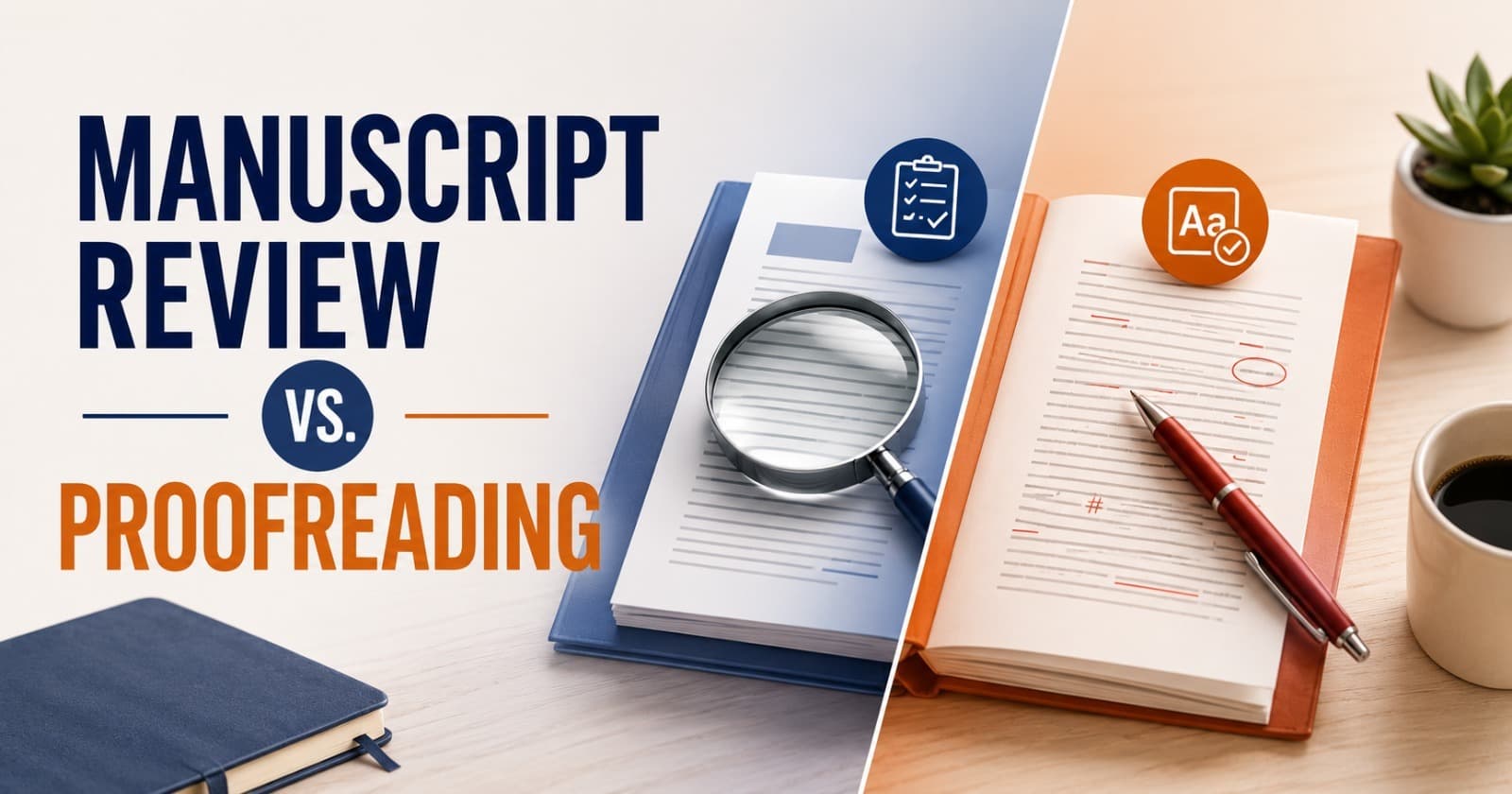
Table of Contents
Completing your manuscript is a significant achievement, but publishing a book requires more than just writing "The End." Before your work reaches readers, it's essential to ensure both the content and the language are polished. This often leads authors to ask an important question: manuscript review vs proofreading—which service do you actually need?
Although the two terms are often used interchangeably, they serve very different purposes. Understanding the difference can help you make the right investment at the right stage of your publishing journey.
A manuscript review is a comprehensive assessment of your book before it moves to the editing or publishing stage. Instead of focusing on grammar or punctuation, it evaluates the overall quality of your manuscript.
A review looks at elements such as the structure of the book, logical flow between chapters, clarity of ideas, readability, consistency, and the effectiveness of your message. The goal is to identify areas that need improvement so you can strengthen your manuscript before publication.
Many modern manuscript review services also leverage AI to provide detailed, objective feedback within hours. This gives authors actionable insights without the long wait associated with traditional review methods.
Proofreading is the final stage of the editing process. By the time a manuscript reaches proofreading, the content should already be complete and structurally sound.
A proofreader checks for spelling mistakes, grammatical errors, punctuation issues, formatting inconsistencies, and typographical errors. They do not reorganise chapters, rewrite sections, or suggest changes to the book's overall structure.
In simple terms, proofreading focuses on presentation, while manuscript review focuses on substance.
When comparing manuscript review vs proofreading, the biggest difference lies in what each service is designed to improve.
A manuscript review helps you determine whether your ideas are communicated effectively. It identifies weak chapters, repetitive sections, gaps in logic, and areas where readers may lose interest. The feedback helps you revise the manuscript before investing in editing.
Proofreading, on the other hand, assumes that all revisions have already been completed. It is the final polish that ensures your writing is clean and professional before publication.
Choosing proofreading before resolving structural issues can result in unnecessary work if major revisions are required later.
For most first-time authors, a manuscript review should always come before proofreading.
Imagine spending time and money correcting grammar throughout your manuscript, only to realise later that several chapters need to be rewritten or rearranged. Those corrections may need to be repeated after revisions are complete.
Starting with a manuscript review allows you to address larger issues first. Once your content is finalised, proofreading becomes much more effective.
Your manuscript will likely benefit from a review if:
Professional manuscript review services help identify these issues early, allowing you to improve your manuscript before taking the next step.
Proofreading is the right option when your manuscript has already gone through revisions and editing.
If you're confident that your structure, arguments, and chapter flow are complete, proofreading provides the final quality check before publication. It helps eliminate small language errors that could affect your credibility as an author.
However, proofreading should never be expected to fix problems related to content, organisation, or reader engagement.
Technology has made manuscript evaluation faster and more accessible than ever before.
Platforms like Manuscript AI provide AI-powered reviews designed specifically for non-fiction authors. Instead of waiting weeks for feedback, authors receive detailed reports that analyse chapter structure, readability, logical flow, consistency, and clarity in just a few hours.
This enables writers to identify weaknesses early, make informed revisions, and move forward with greater confidence before investing in professional editing or proofreading.
A successful publishing journey follows a logical sequence. First, complete your manuscript. Then, get a manuscript review to identify areas for improvement. Revise your manuscript based on the feedback, make any necessary edits, and finally, have it proofread before publication.
Following this order helps you avoid unnecessary editing costs while ensuring your book is both well-written and professionally presented.
The debate around manuscript review vs proofreading isn't about choosing one over the other. Both play an important role in preparing your book for publication, but they serve different purposes.
A manuscript review strengthens the content, improves structure, and provides objective feedback before editing begins. Proofreading is the final quality check that ensures your manuscript is free from language and formatting errors.
If you're still refining your book, start with professional manuscript review services. Building a strong foundation before polishing the details will help you publish a book that is clear, engaging, and ready to make a lasting impression on readers.

Co-founder of Manuscript AI | Ex-Bain & Co, Ex-Founder Writee AI (Acquired’23)